When you’re sourcing manhole safety equipment for a municipal crew, the question sounds simple: which system gives you the best light output with a barrier already built in?
The honest answer is that most products on the market don’t actually answer that question. They solve one side of it. You get a protection ring with no lighting. You get a hanging lamp with no barrier. You end up piecing together two or three separate tools to cover what should be one controlled setup at the opening.
This article breaks down the main options available to municipal contractors and utility crews, compares them on the specs that matter, and explains why the combination of output and integrated barrier protection is rarer than the market makes it look.
Why Output and Barrier Design Both Matter
Most field operations address lighting and barrier protection as separate problems, which means separate tools, separate deployment steps, and more time before the work zone is fully controlled. In active roadways or tight corridors under time pressure, that friction compounds fast. An integrated system that puts meaningful light output and a physical barrier into the same footprint removes that problem at the source. The question is whether any product actually delivers both at a level that holds up in real conditions.
What a qualified system needs to cover:
- Lumen output strong enough to eliminate shadows at the rim and inside the structure
- A physical barrier that guards the opening, not just marks it
- A single deployment that controls both hazards at once
The Options on the Market
The ABS Edge Protection Ring (Protection, No Light)
One of the most widely used options in the municipal sewer space is the ABS plastic edge protection ring. Available from multiple manufacturers, this type of ring is made from high-quality ABS plastic in safety orange, fits manhole openings from 20 to 34 inches depending on model, and provides 360-degree edge protection for camera lines, jetter hoses, and CIPP liners. It drops in quickly, keeps equipment from riding against sharp casting edges, and the orange color acts as a visual cue around the open access point.
What it does not do is illuminate anything. There is no lumen output. No lighting component at all. The ABS edge protection ring is a passive protection tool, and a solid one in its category, but it is not a manhole lighting system. Crews using this type of ring still need to source lighting separately, which means a separate deployment step and no guarantee the light is positioned correctly relative to the opening.
It also has no aerosol shield, no rope management, and no hose roller. For edge protection and basic visual identification of an open manhole, it performs its function. For a crew that needs visibility inside the structure, it does not get you there.
Where it works: Edge protection, basic visual identification of an open manhole, camera and jetting operations where lighting is handled separately.
Where it stops: No lumen output, no aerosol protection, no rope or hose management. Lighting, mist containment, and tie-off points all require separate solutions.
The Aluminum Roller Safety Cover (Cover, No Light)
The aluminum roller safety cover prioritizes hose and cable management alongside fall prevention. The mesh frame creates a physical barrier over the opening while a single roller guides jetting hoses down without abrasion. Aluminum construction and a 600-pound weight capacity make it more durable than plastic alternatives.
Where it works: Fall protection, basic hose management, camera and jetting operations in good light conditions.
Where it stops: No lumen output of any kind. In low-light conditions, the mesh grill gives you visibility into the hole but does nothing to illuminate it. Aerosol containment and rope management still require separate solutions.
The Industrial Hanging Manhole Lamp (Light, No Barrier)
Industrial hanging manhole lamps offer high-output, explosion-proof illumination designed for hazardous atmosphere environments where gas is present. For certain confined space scenarios, that engineering is exactly right.
For municipal sewer contractors, the fit breaks down quickly. The fixture hangs inside the manhole on a bracket, leaving the rim area unguarded and requiring a separate barrier setup before the work zone is controlled. It does not shield aerosols, manage hose routing, or act as a physical deterrent at the edge. In a standard jetting or inspection workflow, it adds setup complexity while still leaving protection gaps.
Where it works: Hazardous atmosphere confined space environments where explosion-proof, high-output illumination is the primary requirement and a separate barrier setup is already in place.
Where it stops: Active municipal sewer jetting and inspection workflows. No integrated barrier, no aerosol shielding, no hose or rope management. Requires additional tools before the work zone is controlled.

Light Ring Illuminated Manhole Protection System (Light + Barrier + More)
The Light Ring is the only product in this category that was designed from the start to combine high-output LED illumination with an integrated physical barrier, specifically for municipal sewer and utility operations.
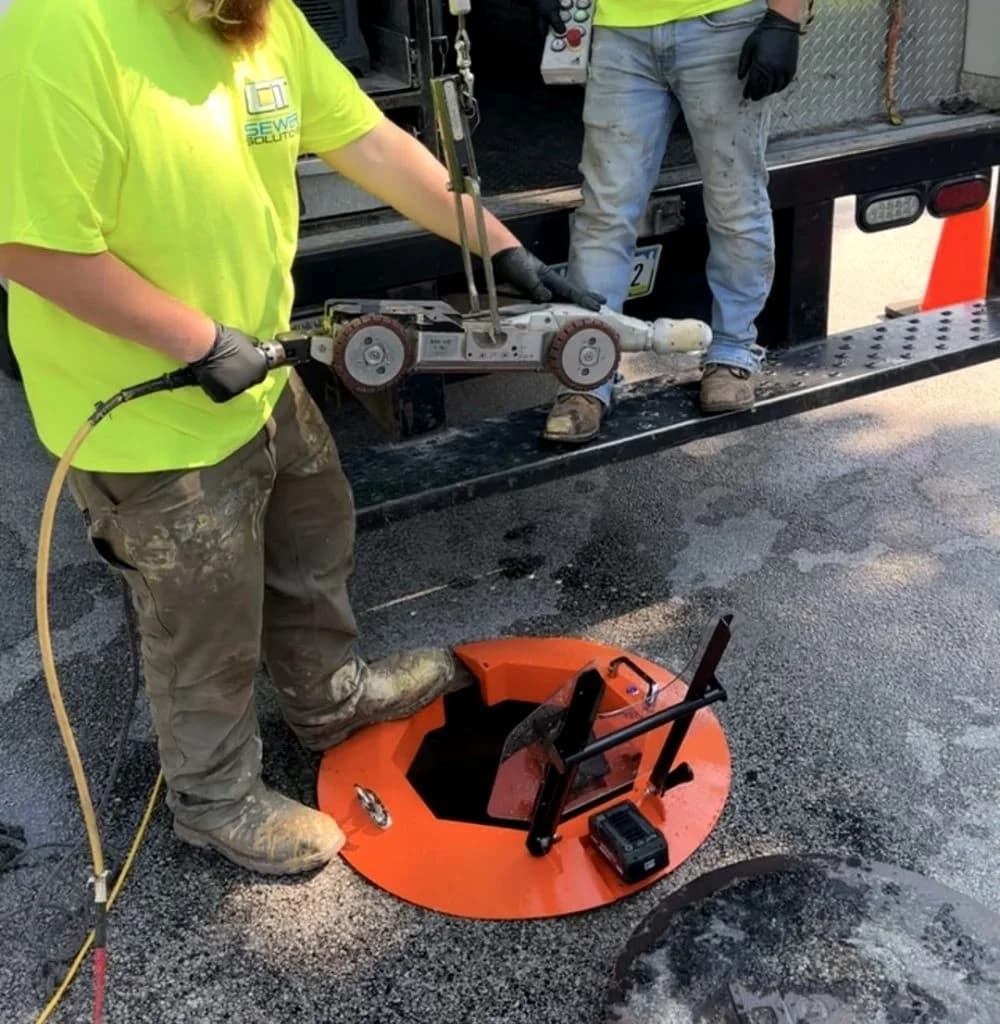
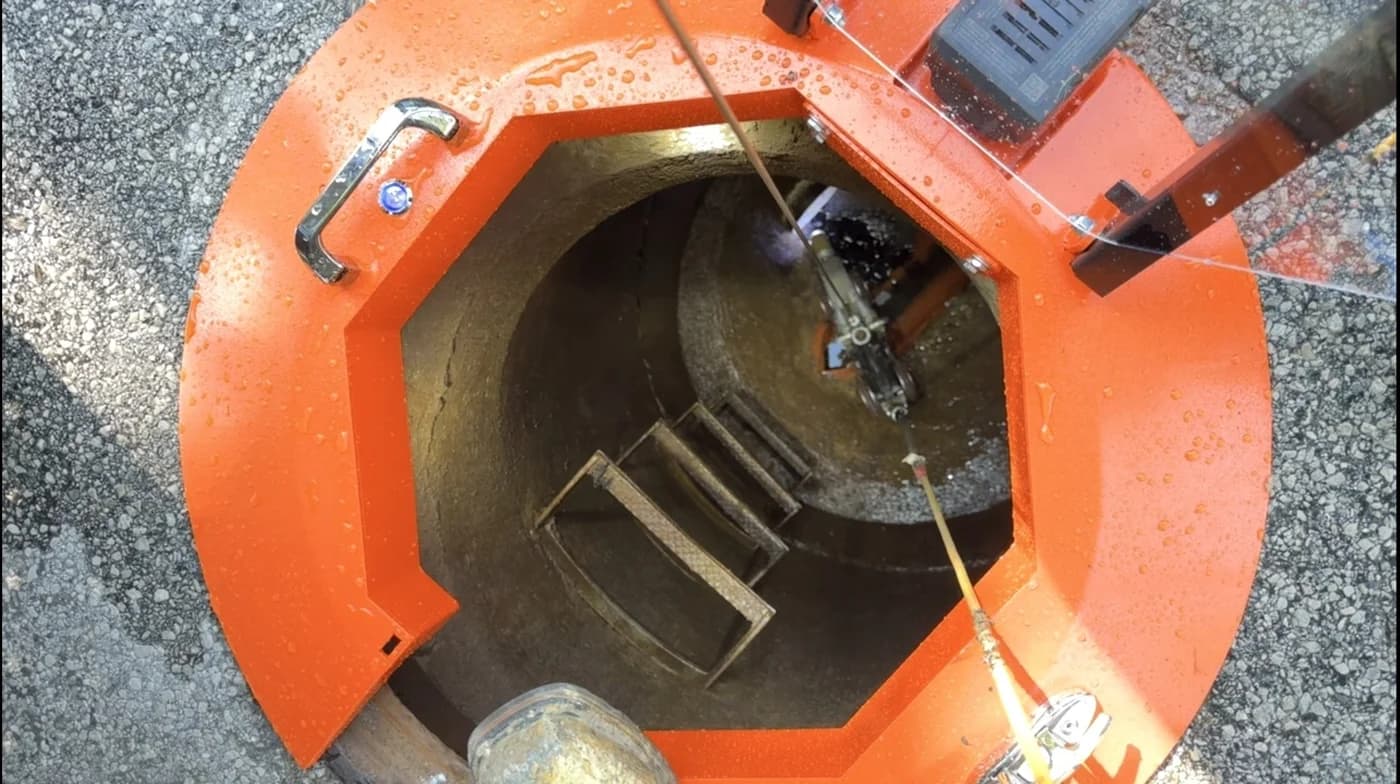
It delivers 6,000 lumens through four 1,500-lumen LED units mounted on an all-aluminum ring frame. The frame rests directly on the manhole opening and acts as a physical and visual barrier against accidental falls. A flip-up plexiglass shield contains aerosol mist and jetting spray at the source, protecting crew from bacterial and debris exposure during cleaning operations. An integrated downrigger roller guides hoses into the opening without abrasion. A rope cleat provides a secure, purpose-built tie-off point for tiger tail ropes, eliminating the improvised tie-offs to truck bumpers or covers that create trip hazards and equipment damage risk.
It runs on DeWalt and Milwaukee M18 battery platforms. No cords. No generators. It deploys in seconds and runs on the same batteries already on the truck.
The Light Ring was designed by Shane Jacobson, a second-generation sewer professional with 18 years of field experience. It was built because the tools available to his crews did not solve the whole problem. Nearly a decade of refinement and three production models later, it is the product in this category that actually answers the question most contractors are asking: which system covers lighting, barrier protection, and workflow management in one setup?
Side-by-Side Comparison
| Feature | ABS Edge Protection Ring | Aluminum Roller Cover | Industrial Hanging Lamp | Light Ring |
| LED Lumen Output | None | None | High (industrial hanging) | 6,000 lumens |
| Integrated Safety Barrier | Partial (edge ring) | Yes (mesh grill) | No | Yes (aluminum frame) |
| Aerosol / Mist Shield | No | No | No | Yes (flip-up plexiglass) |
| Hose / Rope Management | No | Roller only | No | Roller + rope cleat |
| Battery Powered | No | No | No | Yes (DeWalt / Milwaukee) |
| Built for Sewer Jetting | Yes | Yes | No | Yes |
| Built for CCTV Inspection | Yes | Yes | No | Yes |
| Integrated System (all-in-one) | No | No | No | Yes |
Ready to see how the Light Ring compares in the field? Request a demo at LightRingInc.com and put it in front of your crew.
What Lumen Output Actually Means Inside a Manhole
Raw lumens tell part of the story. How that light is distributed inside a confined, shadowed structure tells the rest.
A hanging fixture produces a cone of light aimed downward. The rim area, the ladder rungs, the upper section of the pipe, and the surfaces directly below the lip all remain in shadow. Crews working around the opening still have limited visibility of the zone where most falls and equipment contact events happen.
A ring-mounted system distributes light radially from the rim outward and downward. At 6,000 lumens positioned at the opening, the Light Ring eliminates shadows across the full working area at the manhole surface. Camera crawlers can be guided into position with full visibility of the opening. Hose alignment into drop connections is clearer. Crews can verify placement before committing to a deployment without relying on a handheld flashlight in the other hand.
In low-light conditions, night work, overcast days, or shaded street locations, the difference between a ring-mounted 6,000-lumen system and no integrated lighting is not subtle. It changes how confidently crews move, how accurately equipment is staged, and how visible the work zone is to passing vehicles and pedestrians.
What to Look for When Evaluating a Manhole Lighting System
If you are evaluating options for your crew or fleet, here is the short version of what actually matters:
Lumen output rated for confined, shadowed space use. Surface-level lighting numbers do not account for the absorption and shadow dynamics of a manhole structure. Look for systems that distribute light across the rim, not just downward into the pipe.
A barrier that physically protects the opening. Visual identification (like safety orange color) helps, but it does not stop a fall. A structural frame that physically guards the opening is a different level of protection.
Battery compatibility with your existing platform. Cords and generators add setup time and create trip hazards. If your fleet already runs DeWalt or Milwaukee, a system that shares that battery is a meaningful operational win. The Light Ring Mounting System takes that a step further, giving each unit a dedicated, secured home on the truck so it is protected between jobs and ready the moment the crew arrives on site.
Aerosol protection for jetting operations. Mist containment is not optional for crews running jet trucks. It is a worker health issue and increasingly a compliance concern.
Rope and hose management. Every improvised tie-off to a bumper or cover is a potential trip hazard and a source of unexpected equipment movement. A purpose-built cleat eliminates that.
Field-tested design. Lab specs matter less than whether the product was designed by people who run sewer operations. There is a meaningful difference between a product engineered for a catalog and one that came out of 18 years of field experience.
The Bottom Line for Municipal Contractors
If your crew needs a manhole lighting system with the highest output and an integrated safety barrier, there is one product on this list that qualifies on both counts: the Light Ring.
The other options have their place. The ABS edge protection ring is a solid passive protection tool. The aluminum roller cover handles hose management and fall prevention. The industrial hanging lamp is built for hazardous atmosphere environments. But none of them combine high-output illumination, a structural barrier, aerosol shielding, and workflow tools into a single deployable system designed specifically for municipal sewer and utility operations.
The Light Ring does. It is the product that answers the question this article started with, and it is the one municipal contractors and utilities are increasingly building into their standard operating setup.
See the specs and request a field demo at LightRingInc.com.