
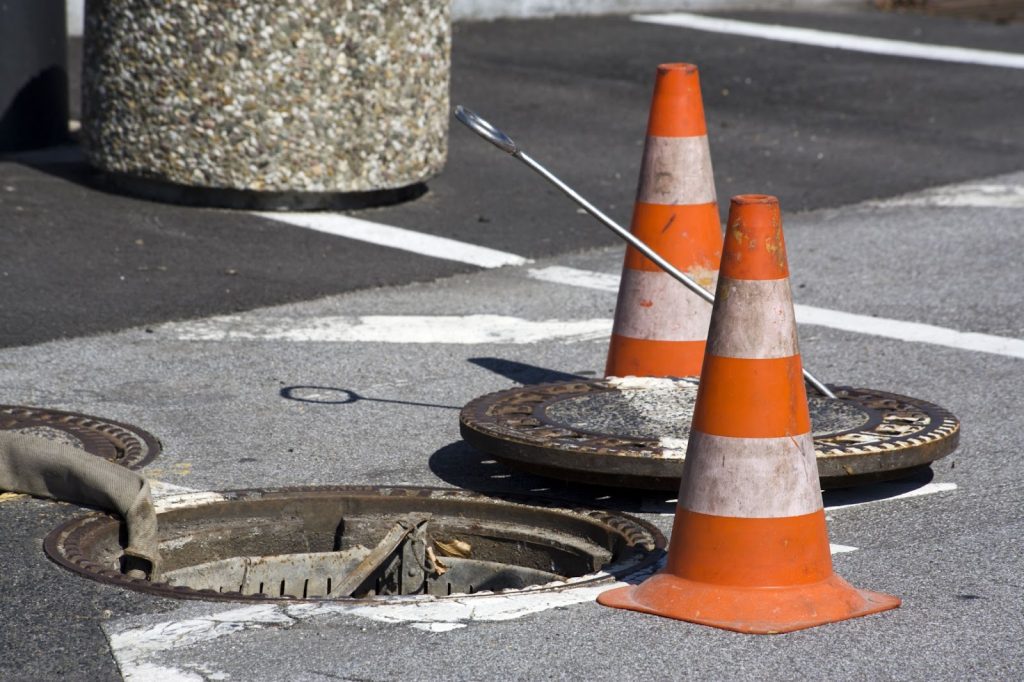
Manholes are among the most routine access points in utility operations. Crews open them daily for inspection, maintenance, and emergency response, often under compressed timelines and variable site conditions. Because they’re so familiar, they’re easy to treat like “simple infrastructure.” In reality, they’re compact, high-consequence job sites that routinely stack hazards in one small footprint.
Here’s the uncomfortable truth: many serious incidents tied to manhole work don’t happen during entry. They happen during approach, setup, repositioning, and teardown, when attention is split, traffic is moving, lighting is changing, and the work zone is still coming together.
Utility worker manhole safety isn’t defined by one hazard. It’s defined by risk concentration: traffic exposure, limited visibility, uneven surfaces, environmental variability, material handling, and time-sensitive decisions all colliding in the same place.
A manhole location is rarely a controlled environment. Crews are often working in active roadways or tight corridors that were never designed for staging, long setup windows, or generous buffer zones.
Typical conditions include:
Each of these is manageable on its own. The problem is that they rarely show up one at a time. When multiple exposures exist simultaneously, the margin for error shrinks fast, even with trained, experienced people.
Manhole work is repetitive. That’s operationally efficient, but it also means exposure accumulates across hundreds of touchpoints per year per crew. Routine doesn’t equal safe. Routine often equals normalized risk.
This shows up in injury trends at a macro level: the most expensive injuries are frequently tied to everyday events like overexertion, falls, and struck-by exposure.
Liberty Mutual’s 2025 Workplace Safety Index estimates that the top ten causes of the most serious workplace injuries account for over 86% of the total cost of workplace injuries, totaling $58.78B.
Within that same index, the #1 and #2 drivers are overexertion involving outside sources ($13.7B) and falls on the same level ($10.5B).
It also highlights struck-by object/equipment and falls to a lower level as major contributors (nearly $11.6B combined).
Those categories map directly onto the manhole environment:
The strategic takeaway: the work isn’t “low risk” just because it’s common. In many cases, it’s high risk precisely because it’s common.
Most utilities already have policies for traffic control, confined space entry, PPE, and job briefings. On paper, this framework is solid.
The challenge is field execution under real constraints. The work environment introduces friction that checklists can’t fully absorb, like:
That’s where the gap appears: procedural compliance can exist while environmental control degrades. The cones are out. The work zone is technically marked. But drivers and pedestrians still don’t read it clearly, and crews still don’t have consistent visual boundaries around the access point.
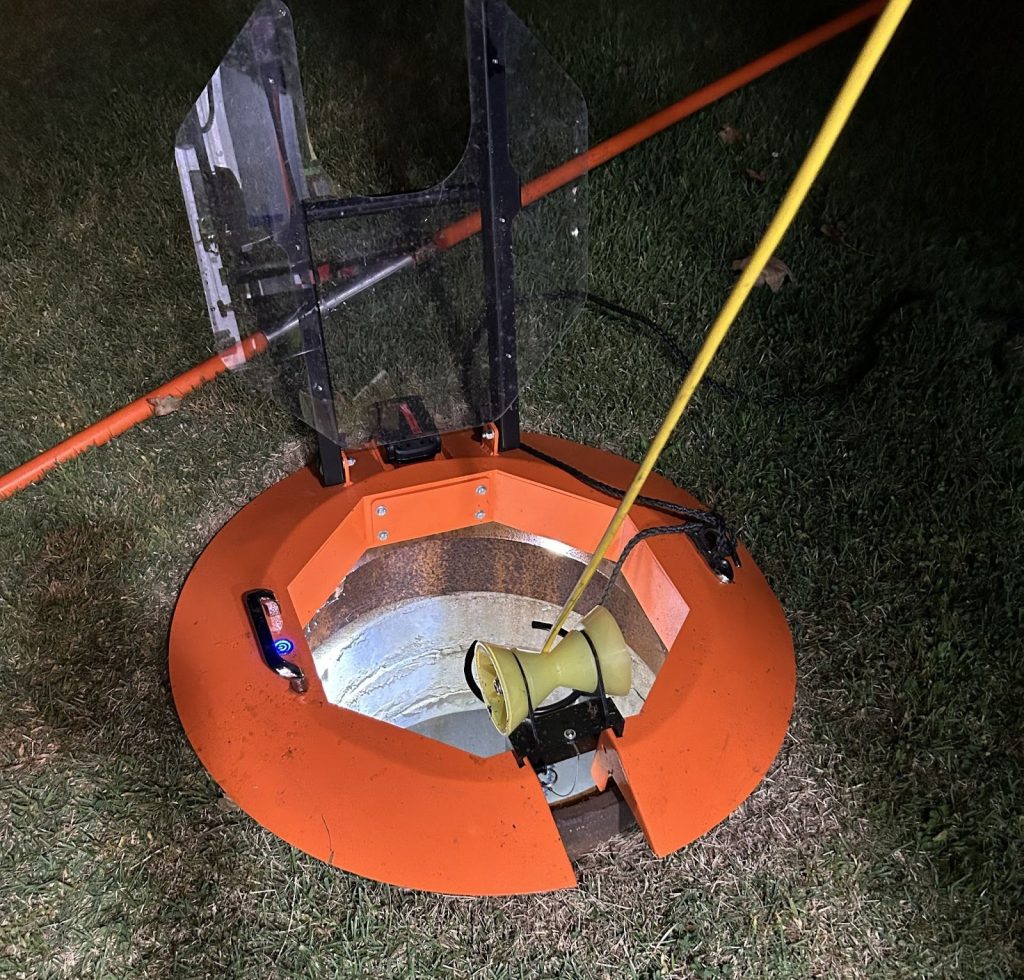
Visibility shapes everything: how drivers interpret the scene, how crews navigate the footprint, how hazards are recognized early, and how confidently work proceeds during setup and teardown.
NIOSH puts it bluntly: work zones are dangerous for workers and motorists. In 2022, work zones saw about 96,000 crashes, 37,000 injuries, and 891 fatal injuries. Of 136 pedestrian fatalities, 105 were workers.
Manhole operations frequently occur inside exactly these kinds of work zones. And while traffic plans matter, visibility is what turns the plan into something that works in real time.
When lighting is inconsistent or the access point blends into the roadway, crews lose seconds. Drivers lose context. Pedestrians drift. Those are small breakdowns that can create big outcomes.
If manholes are treated as “just access points,” the setup becomes reactive. If they’re treated as high-risk micro job sites, the setup becomes deliberate.
Practical controls that reduce exposure (without rewriting your whole safety program):
Build a simple, repeatable setup sequence that starts before the cover moves:
The open manhole is the highest-consequence feature on site. Make it visually obvious:
A lot of teams relax too early. Teardown is when attention splits and people turn their backs to traffic. Keep boundaries and visibility controls in place until the site is truly secure.
Improving visibility at active manhole job sites is one of the most direct ways to reduce preventable exposure. When lighting is consistent and clearly defines the work area, crews can maintain situational awareness through approach, setup, work execution, and teardown.
The Light Ring was engineered specifically for manhole environments to deliver consistent, elevated illumination around the access point. The objective is straightforward:
This doesn’t replace training, traffic plans, or confined space protocols. It reinforces them by strengthening a foundational control that influences how well those procedures perform under real-world conditions.
Manhole job sites become high-consequence environments when traffic exposure, constrained space, and limited visibility intersect under routine operating pressure. Injury trends make one thing clear: familiarity doesn’t reduce risk, it often normalizes it.
The difference between a compliant work zone and a controlled work zone is usually visibility, clarity, and consistency in how hazards are defined and communicated on site.
If you want to reduce ambiguity around open access points and strengthen manhole job site control without reinventing your safety program, a visibility-first approach is a practical place to start.
Next step:Schedule a field demonstration or operational walkthrough with Light Ring to evaluate how improved manhole visibility can fit into your current traffic control and safety procedures.