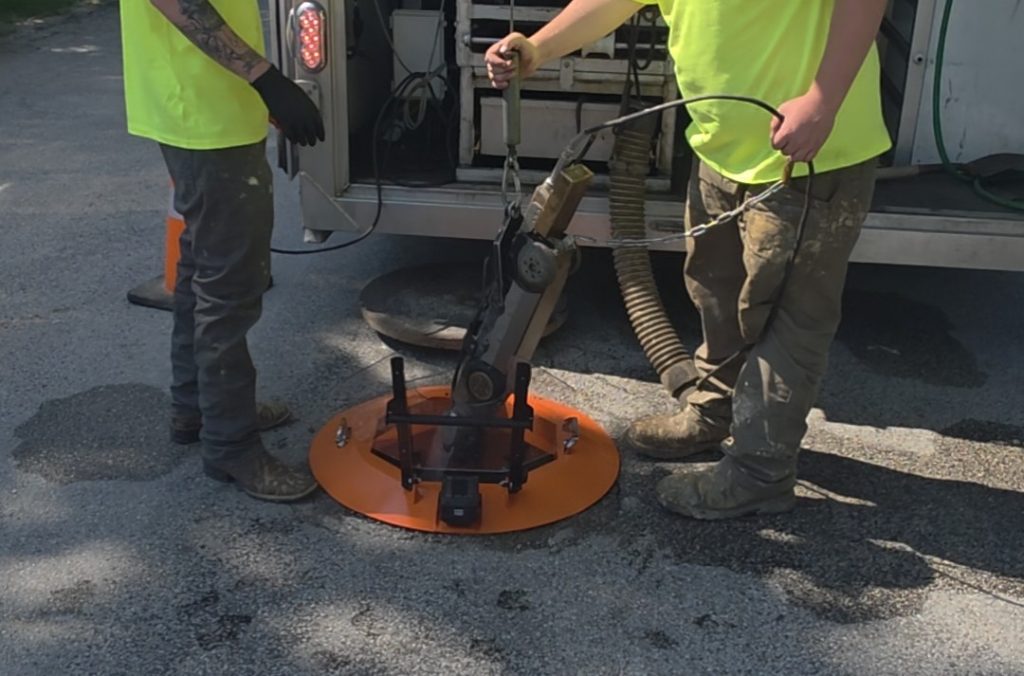
For more than a century, “manhole protection” has meant whatever crews could put around an open access point to keep workers, equipment, and the public safe during utility maintenance. That definition has changed substantially since the first cast iron covers were installed in growing US cities. What started as a single passive component has evolved into a multi-function category now known as the manhole protection system.
A manhole protection system is the equipment and engineering controls deployed at an open manhole to prevent worker falls, equipment damage, and public hazard exposure during active utility work. That level of integration did not exist a decade ago. Here is how the category got here.
The short answer: Manhole protection has evolved through five distinct stages over the last century: cast iron covers, improvised cone-and-rope setups, ABS plastic edge rings, aluminum roller grills, and integrated manhole protection systems. Each stage solved part of the problem, but only the integrated system covers structural barrier, lighting, aerosol containment, hose routing, and tie-off in a single deployable unit.
A manhole protection system has to function during the entire window the cover is removed, not just at the moment of entry. To do that completely, the equipment at the opening has to handle three jobs at the same time:
For most of the category’s history, no single product covered all three. That gap is the reason the system evolved.
The first form of manhole protection was the cover itself. As combined sewer, gas, and steam systems spread under growing US cities in the late 19th century, cast iron manhole covers became the standard interface between the underground infrastructure and the street above. Heavy, durable, and effectively permanent, they sealed the opening and made the manhole invisible as a hazard.
Protection was passive, and it worked precisely because no one had to think about it.
The flaw was structural. The moment a crew lifted the cover to perform maintenance, every form of protection at the access point disappeared with it. Every product and practice that followed exists to fill the gap that opens the moment a manhole comes off.
For most of the 20th century, manhole protection during active work meant whatever a crew had on the truck. The standard setup looked roughly the same from one utility to the next:
This solved part of the problem. It gave drivers a visual cue, defined a rough perimeter, and created an awareness boundary around the work zone. What it left untouched was the access point itself. No structural barrier at the rim. No consistent light at the opening. No containment for mist or aerosols during jetting. The improvised tie-offs became their own hazard. Ropes shifted underfoot inside the work zone.
The cone-and-rope era is not over. Plenty of crews still operate this way. A coned perimeter is compliant. It is not controlled.
The first product engineered specifically as manhole protection during active work was the ABS plastic edge protection ring. Molded in safety orange, sized to fit openings between 20 and 34 inches, and priced low enough to live on every truck, the ABS ring became the default upgrade from cones and rope across the municipal sewer industry.
What the ring introduced: Dedicated edge protection for jetter hoses, camera cables, and CIPP liners running over the rough rim of the casting. A purpose-built high-visibility marker that did not depend on whether someone had set the cones correctly. A product specifically designed for the active-work window, not borrowed from another part of the truck.
What the ring left exposed: ABS plastic flexes and breaks under impact, which means a worker stumbling toward the opening is not stopped by the ring. There is no integrated lighting, no aerosol containment, and no purpose-built tie-off. The ring is a passive marker, not a structural barrier.
For a deeper field breakdown of where standard cover rings stop short, see our previous analysis of the manhole fall protection gap. The ABS ring is still everywhere because it is cheap and easy. It is also why most jobsite incidents at the manhole still happen in conditions the ring was never designed to control.
The next step in the evolution introduced real structural protection at the opening. The aluminum roller grill is a mesh-frame safety cover, often rated to roughly 600 pounds, with an integrated roller for hose routing during jetting operations. Unlike the ABS ring before it, the grill functions as an actual barrier across the manhole. A worker who slips toward the opening contacts the grill before contacting the hole.
That single change was the first time the category went from marking falls to preventing them.
It also exposed where the workflow was still fragmented. Crews running grills:
The category had finally produced a real fall barrier, but the work around the opening was still spread across three or four separate tools. For crews evaluating where the aluminum grill sits inside the current category, our buyer’s guide to manhole cover rings for jet truck and CCTV operations compares it directly against integrated systems on the seven criteria that matter most.
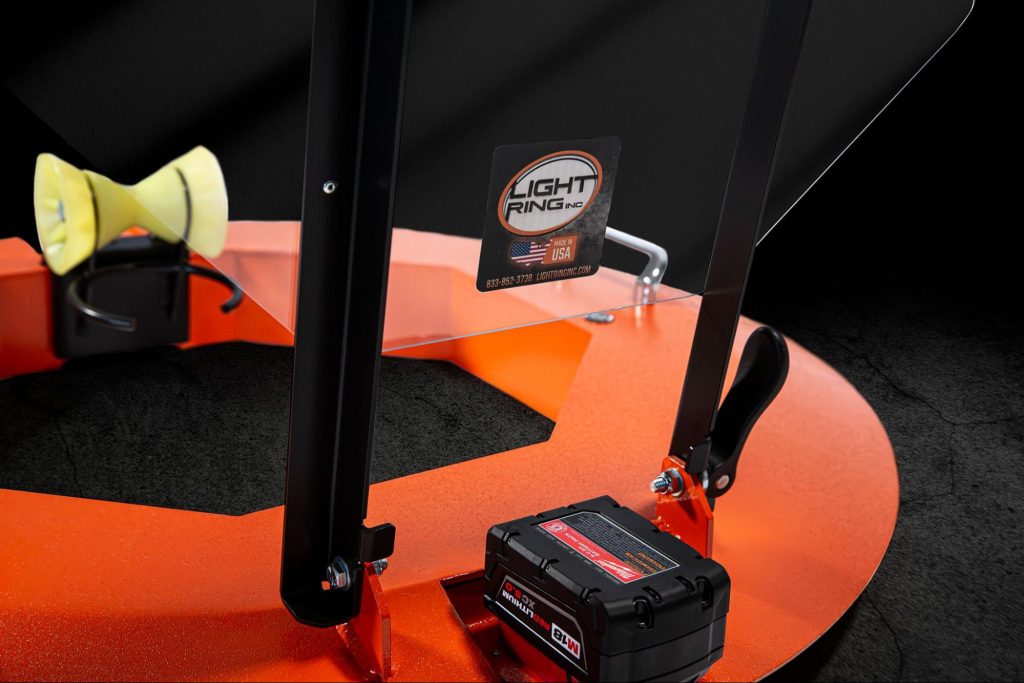
The integrated manhole protection system is the current evolution of the category. It treats barrier, lighting, containment, hose routing, and tie-off as one problem, not five. It collapses them into a single deployable unit.
A complete integrated manhole protection system delivers:
Every function exists in an earlier stage of the category. Just never in the same product. Integration is what turns five workarounds into one engineering control.
The Light Ring is the integrated manhole protection system built to do all five jobs in one deployment. It was designed by Shane Jacobson, a second-generation sewer professional with 18 years of field experience. He saw the gaps from inside the work and engineered a single unit to close them.
Three forces are pushing crews up the evolution curve at the same time. Together, they explain why “manhole protection system” is becoming the operative term across municipal and contractor procurement.
OSHA’s hierarchy of hazard prevention puts engineering controls above administrative controls and PPE. Engineering controls remove the hazard from the environment instead of asking the worker to manage it. An integrated system functions as an engineering control across fall, struck-by, and aerosol exposure at the same time, which makes it the highest-leverage compliance investment available at the access point. The OSHA hazard prevention framework is the same one most utility insurers and risk managers use to evaluate capital safety spending.
Liability data has caught up to operational reality. Liberty Mutual’s 2025 Workplace Safety Index puts same-level falls at $10.5 billion in annual direct cost and struck-by and fall-to-lower-level events at nearly $11.6 billion combined. Every one of those categories maps onto manhole work: lifting covers, navigating wet pavement at the rim, working alongside live traffic in tight zones. A single prevented incident funds an integrated system many times over. That is the math safety directors recognize on contact.
Safety directors are increasingly championing the buy. Ops managers and field supervisors, the roles that historically approved manhole equipment, often classify integrated systems as discretionary or optional. Safety directors classify them as proactive savings against injury exposure. The largest recent adopters of integrated manhole protection systems are public utilities and water companies where the safety director championed the purchase, not where the field crew did. That shift in who owns the buy is part of why the category has accelerated in the last five years.
The terminology has caught up to the equipment. Crews and procurement officers are starting to call this category “manhole protection systems” rather than cover rings, lights, or grills, because none of the legacy terms describe what the system actually does. For the full breakdown of how integrated systems support OSHA manhole safety standards, see our compliance guide.
Most crews can identify their current stage in a single glance at the work zone.
| Stage | What it covers |
|---|---|
| Stage 2: Cones, rope, and a flashlight | Compliant in some jurisdictions. Controlled in none. |
| Stage 3: Plastic edge ring over the casting | Equipment protection at the rim. No structural barrier. No lighting. |
| Stage 4: Aluminum roller grill across the opening | Real fall barrier. No lighting. No containment. Improvised tie-off. |
| Stage 5: Single unit, all five jobs in one deployment | Barrier, lighting, containment, hose routing, tie-off. |
Most municipal and contractor crews today operate somewhere between Stage 2 and Stage 4. The gap between any two of the five jobs of manhole protection is where actual incidents cluster, which means a Stage 4 crew is materially closer to an incident than its compliant paperwork suggests.
The question is not whether to move up the curve. It is whether the move happens before or after a recordable.
The obstacle to moving up the curve is not technical. It is capital approval. A line item that needs signoff can stall for an entire budget cycle, sometimes longer, even when the safety case is clean.
The Light Ring rental program is built to remove that friction. Rentals start at $250 per week, with a one-week minimum and up to $1,500 in rental fees credited toward the purchase of a new unit. No long-term contract. One real week on an active job site produces the deployment documentation a safety director needs for the capital request, and settles the operator debate one way or the other.
Test the system on an active jobsite before committing capital. Use the rental period to document deployment, operator feedback, and safety value.
A manhole protection system is the equipment deployed at an open manhole during utility maintenance to prevent worker falls, equipment damage, and public hazard exposure. A modern integrated system handles structural barrier, lighting, aerosol containment, hose routing, and a tiger tail tie-off in one deployable unit.
A manhole cover protects the opening when it is sealed and the structure is inactive. A manhole protection system protects workers, equipment, and the public during the window when the cover is removed and crews are performing maintenance. The two work in sequence, not as substitutes.
An integrated manhole protection system includes a structural barrier at the rim, high-output LED lighting, aerosol and mist containment, integrated hose and cable routing, and a purpose-built tiger tail tie-off. All five functions deploy in a single unit instead of pulling five separate tools.
OSHA’s hierarchy of hazard prevention ranks engineering controls above administrative controls and PPE. An integrated manhole protection system functions as an engineering control across fall protection, confined space, illumination, and aerosol exposure at the same time. That makes it the highest-leverage compliance investment available at the access point.
Integrated manhole protection systems on the current market generally start in the $3,000 to $4,500 range depending on opening size and configuration. For current pricing on the Light Ring (22 to 30 inch openings) and Light Ring XL (26 to 36 inch openings), contact Light Ring Inc. directly.
Yes, the Light Ring is currently the only product on the market that integrates a structural barrier, LED lighting, aerosol containment, hose routing, and a purpose-built tiger tail tie-off in a single deployable unit. Other products in the category address one or two of these functions but require separate tools to cover the rest.
The Light Ring fits standard manhole openings from 22 to 30 inches. The Light Ring XL is designed for larger openings from 26 to 36 inches, which is typical for wastewater treatment and large-diameter sewer work.
Yes. Light Ring Inc. offers a formal rental program at $250 per week with a one-week minimum. Up to $1,500 in rental fees can be credited toward the purchase of a new unit, which allows crews to evaluate the system on active jobs before committing capital.
A manhole protection system is the equipment deployed at an open manhole during utility maintenance to prevent worker falls, equipment damage, and public hazard exposure. A modern integrated system handles structural barrier, lighting, aerosol containment, hose routing, and a tiger tail tie-off in one deployable unit.
A manhole cover protects the opening when it is sealed and the structure is inactive. A manhole protection system protects workers, equipment, and the public during the window when the cover is removed and crews are performing maintenance. The two work in sequence, not as substitutes.
An integrated manhole protection system includes a structural barrier at the rim, high-output LED lighting, aerosol and mist containment, integrated hose and cable routing, and a purpose-built tiger tail tie-off. All five functions deploy in a single unit instead of pulling five separate tools.
OSHA’s hierarchy of hazard prevention ranks engineering controls above administrative controls and PPE. An integrated manhole protection system functions as an engineering control across fall protection, confined space, illumination, and aerosol exposure at the same time. That makes it the highest-leverage compliance investment available at the access point.
Integrated manhole protection systems on the current market generally start in the $3,000 to $4,500 range depending on opening size and configuration. For current pricing on the Light Ring (22 to 30 inch openings) and Light Ring XL (26 to 36 inch openings), contact Light Ring Inc. directly.
Yes, the Light Ring is currently the only product on the market that integrates a structural barrier, LED lighting, aerosol containment, hose routing, and a purpose-built tiger tail tie-off in a single deployable unit. Other products in the category address one or two of these functions but require separate tools to cover the rest.
The Light Ring fits standard manhole openings from 22 to 30 inches. The Light Ring XL is designed for larger openings from 26 to 36 inches, which is typical for wastewater treatment and large-diameter sewer work.
Yes. Light Ring Inc. offers a formal rental program at $250 per week with a one-week minimum. Up to $1,500 in rental fees can be credited toward the purchase of a new unit, which allows crews to evaluate the system on active jobs before committing capital.
Manhole protection systems have evolved past cones, plastic rings, and improvised barriers. See the Light Ring on your jobsite, on your terms.