Most manhole fall protection on the market today is passive, and that is the gap costing crews near misses and accidents in the field. The current tools check a visual box, but they do not actively do the work that fall prevention requires once a crew is on site, equipment is moving, and conditions start changing.
That gap matters. The majority of manhole near misses and falls do not happen during confined space entry. They happen during approach, setup, repositioning, and teardown, when crews are loading equipment past the opening, drivers are not slowing for the work zone, and the access point itself is the highest-consequence feature on a job site that was never designed for staging.
This article breaks down what a standard manhole cover ring actually does, where it stops, and what a more active manhole fall protection system looks like. The differences matter most in the conditions that hide a manhole: night work, emergency response, low ambient light, and standing water. If you are sourcing equipment for a municipal crew or contractor fleet, those are the conditions where passive protection fails first.
Manhole fall protection is the combination of structural barriers, visual identification, and lighting that prevents workers, equipment, and the public from falling into open access points during utility maintenance work.
1. Visual identification. The opening has to be impossible to miss in every condition the work occurs in: full daylight, low ambient light, night shifts, standing water, and emergency response situations. Drivers, pedestrians, and crew members crossing the work zone need to register the hazard from a distance and from low-angle approaches, regardless of when or where the job is happening.
2. Physical barrier. A visual cue is not a stop. A frame that physically guards the rim is what catches a misstep, a stumble, or an equipment shift before it becomes a fall to a lower level.
3. Visibility into the hazard. Crews working around an unlit opening cannot accurately judge edge distance, ladder rungs, or the position of equipment going in or coming out. Shadow at the rim is where most contact events happen.
A real manhole fall protection system has to cover all three. Most products only cover one. That is the gap.
The most common piece of “fall protection” deployed at manholes is the ABS plastic edge protection ring. Safety orange. Drops in over the casting. Fits openings between 20 and 34 inches depending on the model. It is widely available and inexpensive, which is why it is everywhere.
What it does well: Provides 360-degree edge protection for camera lines, jetter hoses, and CIPP liners running over the rim. Adds a visual cue around the opening. Protects equipment from sharp casting edges.
Where the fall prevention story breaks down:
The ABS cover ring is fine for what it is. The problem is when it gets sold as a fall protection solution. It is closer to a high-visibility traffic cone than to a structural manhole fall protection system.
The aluminum roller grill is a meaningful upgrade in the fall protection category. Mesh frame, aluminum construction, often rated to 600 pounds. It functions as a physical barrier across the opening and includes a single roller to guide jetter hoses without abrasion.
What it does well: Provides actual structural protection. A worker who slips toward the opening contacts the grill before contacting the hole. Aluminum and mesh construction holds up to traffic and equipment movement. The integrated roller handles basic hose routing.
Where the manhole fall prevention story still falls short:
The aluminum roller grill is a real fall protection product. It just stops at structural protection and does not extend into the visibility, exposure, and workflow controls that separate compliant work zones from controlled ones.
Fall prevention is not just about catching a fall. It is about preventing the conditions that lead to one in the first place. Visibility is the foundational control that makes every other safety procedure perform the way it is supposed to.
NIOSH data on work zones makes this concrete. In 2022, work zones saw approximately 96,000 crashes, 37,000 injuries, and 891 fatal injuries. Of 136 pedestrian fatalities in those work zones, 105 were workers. Manhole operations happen inside exactly these environments, and the sites where falls and struck-by events cluster are the sites with inconsistent lighting, transitional conditions, or poorly defined work zone boundaries.
When a manhole opening blends into the roadway, three things happen at once: drivers misread the work zone, crews lose seconds during equipment placement, and the access point itself stops functioning as a clearly defined hazard. Each of those is a precursor to a fall, a struck-by, or an alignment failure during equipment deployment.
A passive cover ring does not address any of this. A structural grill addresses one piece. Real manhole fall prevention requires lighting and barrier protection working together at the same time.
Not all manhole access work happens in daylight or in well-lit conditions. Crews open manholes during night shifts, in poorly lit rights-of-way, and during emergency response calls that come without regard for time of day. Sanitary sewer overflows, or SSOs, are one of the most demanding examples. When a system backs up and starts discharging, crews respond in whatever conditions they find: standing water, storm runoff, low visibility, and pressure to act fast.
Those conditions are exactly when a manhole becomes hardest to see. Even an inch of standing water over an open access point can disguise the edge. A reflective surface in the dark, partial submersion, or rain breaking up the sight line all pull the rim into the surrounding scene. Crews who know the site, who placed the cones themselves, who think they know where the opening is, can still misjudge by inches. That margin is enough to turn a routine response into a serious injury.
This is the case for active manhole fall protection at the access point itself, not just around it. Cones define a perimeter. They do not define the hole. In daylight on a clean jobsite, the difference might not matter. At night, in water, in a storm, during an emergency, it is the entire margin between a controlled response and an incident report.
Curious how integrated lighting and barrier protection deploy in real field conditions?
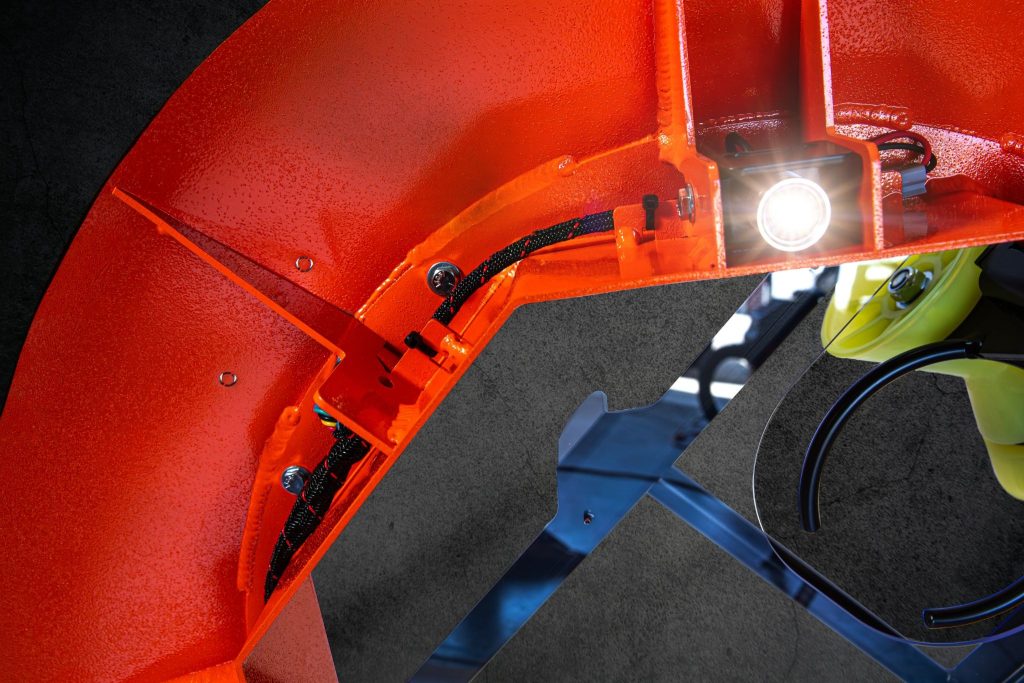
The Light Ring was designed from the start to combine high-output LED illumination with an integrated structural barrier, specifically because passive products were leaving fall prevention gaps that crews kept working around.
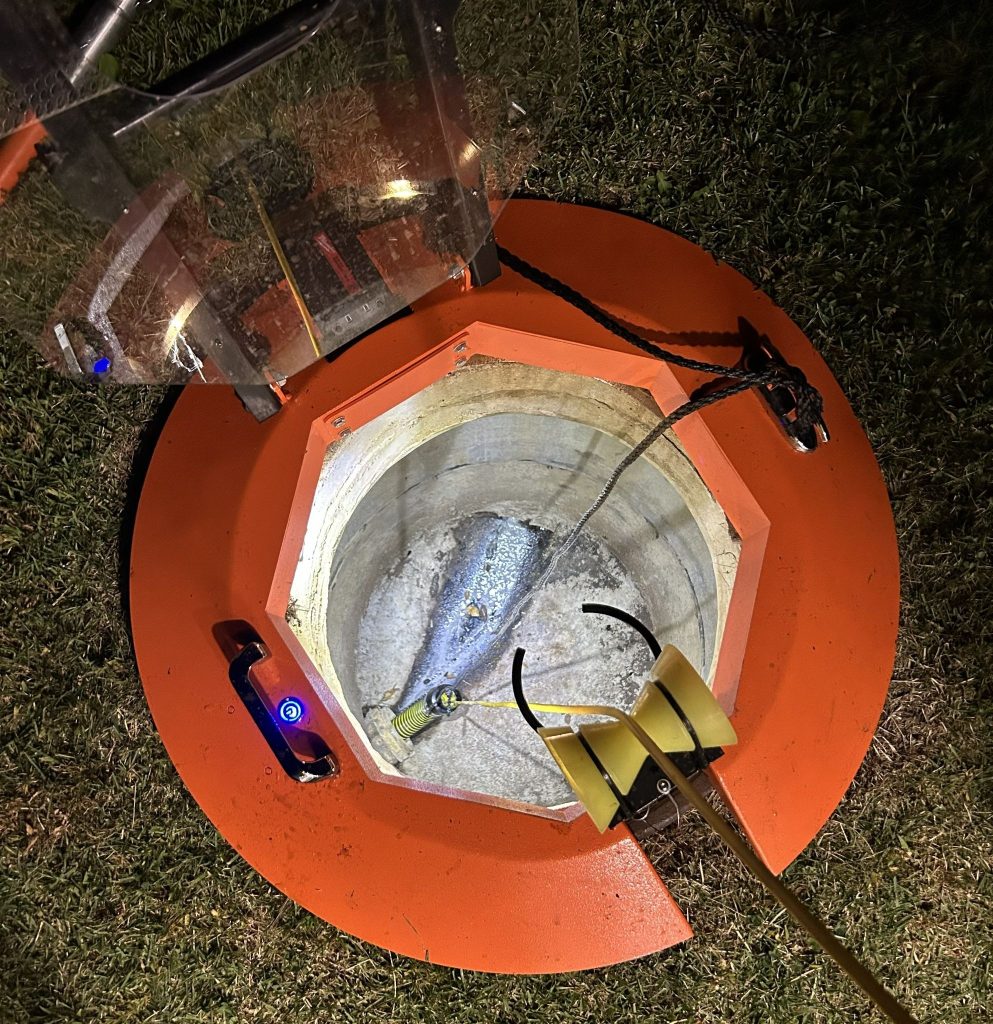
As a manhole safety cover with light, the Light Ring delivers 6,000 lumens through four 1,500-lumen LED modules mounted on an all-aluminum ring frame. The frame rests directly on the manhole opening and acts as a physical and visual barrier against accidental falls. Crews moving equipment past the rim contact the structure, not the hole. Drivers and pedestrians registering the work zone from a distance see a fully illuminated, fully defined hazard, not a passive orange ring against gray pavement.
The active fall prevention features stack from there. A flip-up plexiglass shield contains aerosol mist at the source during jetting. A purpose-built rope cleat eliminates improvised tie-offs to truck bumpers and removes the trip hazards those workarounds create. An integrated downrigger roller guides hoses into the opening without abrasion. The whole system runs on DeWalt and Milwaukee M18 batteries already on the truck, which means no cords trailing across the work zone and no setup delay before fall protection is in place.
This is the difference between a manhole safety cover with light and a passive ring with a sticker. The Light Ring was built by Shane Jacobson, a second-generation sewer professional who designed it specifically because the available tools were not closing the fall prevention gap his crews kept seeing in the field.
| Feature | ABS Cover Ring | Aluminum Roller Grill | Light Ring |
| Visual identification | Color only | Color + structure | Color + structure + LED |
| Structural fall barrier | No (flexes/breaks) | Yes (mesh frame) | Yes (aluminum frame) |
| LED illumination | None | None | 6,000 lumens |
| Aerosol / mist shield | No | No | Yes (flip-up plexiglass) |
| Hose routing control | No | Single roller | Roller + rope cleat |
| Tiger tail tie-off point | No | No | Integrated cleat |
| Battery powered | N/A | N/A | Yes (DeWalt / Milwaukee) |
| Built for sewer jetting | Limited | Yes | Yes |
| Built for CCTV inspection | Limited | Yes | Yes |
| Performance in night / emergency / low-light conditions | Poor (color only) | Poor (no illumination) | Strong (LED + structural barrier) |
| Active fall prevention system | No | Partial | Yes |
The comparison is one thing. Seeing it on your jobsite is another.
If you are evaluating fall protection options for a municipal crew or contractor fleet, here is what actually moves the needle:
Structural protection at the rim. Plastic flexes. Color does not stop a fall. Look for a frame that holds up to contact and registers as a physical barrier, not a marker.
Lighting that distributes across the opening. Hanging fixtures aimed downward leave the rim in shadow. Ring-mounted lighting at the opening eliminates shadow across the working area where most contact events happen, and remains visible through water, low ambient light, and the conditions that come with emergency response work.
Battery compatibility with your existing platform. Cords and generators add setup time and create trip hazards inside the work zone. If your fleet runs DeWalt or Milwaukee, a system that shares those batteries removes setup friction. The Light Ring Mounting System takes that further by giving each unit a dedicated home on the truck so it is protected between jobs and ready when the crew arrives.
Aerosol containment for jetting operations. Worker exposure to sewer mist is not just a comfort issue. It is increasingly a compliance and worker health concern.
Purpose-built tie-off points. Every improvised tie-off is a trip hazard waiting to happen. A rope cleat eliminates that secondary fall risk inside the work zone itself.
Field-tested design. Lab specs matter less than whether the product was designed by people who actually run sewer operations. Ask where the product came from. The answer tells you a lot.
A standard manhole cover ring is a passive marker. A roller grill is a partial structural barrier. Neither one delivers the active manhole fall protection that modern crews need to prevent the near misses and accidents that happen during the most exposed phases of the job.
The gap between passive protection and active fall prevention is not theoretical. It shows up in lost seconds during setup, in shadow at the rim during teardown, in improvised tie-offs that become trip hazards, and in missed visual cues that drivers and pedestrians never register. It shows up most sharply during night work, in standing water, and in emergency response conditions where the margin between knowing where the hole is and misjudging by inches disappears. Those are the conditions that turn routine manhole work into incident reports.
If your crew is still running cones, a plastic ring, and a flashlight, the upgrade path is clear. The Light Ring is the one product in this category designed specifically to close the manhole fall protection gap, integrating structural barrier, high-output lighting, aerosol containment, and workflow controls into a single deployable system.
For crews and decision-makers who want to evaluate the system before committing capital, Light Ring Inc. offers a rental program that puts the unit on active jobs starting at $250 per week, with up to $1,500 in rental fees applied toward purchase. It is the lowest-friction way to put active fall protection in front of your crew and let the field results speak.
Manhole fall protection refers to the physical equipment that guards an open access point, including structural barriers, lighting, and visibility tools. Manhole fall prevention refers to the broader strategy of preventing falls before they happen, which includes equipment, training, work zone setup, and procedural controls. Effective fall prevention requires real fall protection equipment as one of its core components.
A standard ABS plastic cover ring functions primarily as a visual identifier and edge protector for equipment, not a structural fall barrier. Crews relying on a passive cover ring as their primary fall protection should evaluate whether it meets the structural barrier requirements of their site-specific OSHA compliance plan. A system like the Light Ring provides a structural aluminum frame that physically guards the rim of the opening.
A manhole safety cover with integrated lighting eliminates the gap between visibility and physical protection. Separate setups require crews to deploy multiple tools, which adds setup time, creates trip hazards from cords or staging, and leaves moments during deployment when the opening is unguarded. An integrated system like the Light Ring deploys both functions in a single step.
Yes. The Light Ring is designed to integrate with standard sewer cleaning and inspection workflows. Its integrated downrigger roller guides hoses and cables into the manhole without abrasion, and its rope cleat provides a secure tie-off point for tiger tail ropes during jetting operations.
Yes. Light Ring Inc. offers a formal rental program at $250 per week with a one-week minimum. Up to $1,500 in rental fees can be credited toward the purchase of a new unit, allowing crews to evaluate the system on active jobs before committing capital.
Passive cover rings rely on ambient light to function as hazard markers, which means they degrade quickly during night work, in standing water, or during SSO and storm response. Active systems with integrated LED lighting like the Light Ring remain visible through water, low light, and adverse weather, marking the access point itself rather than just the perimeter.
Manhole fall protection refers to the physical equipment that guards an open access point, including structural barriers, lighting, and visibility tools. Manhole fall prevention refers to the broader strategy of preventing falls before they happen, which includes equipment, training, work zone setup, and procedural controls. Effective fall prevention requires real fall protection equipment as one of its core components.
A standard ABS plastic cover ring functions primarily as a visual identifier and edge protector for equipment, not a structural fall barrier. Crews relying on a passive cover ring as their primary fall protection should evaluate whether it meets the structural barrier requirements of their site-specific OSHA compliance plan. A system like the Light Ring provides a structural aluminum frame that physically guards the rim of the opening.
A manhole safety cover with integrated lighting eliminates the gap between visibility and physical protection. Separate setups require crews to deploy multiple tools, which adds setup time, creates trip hazards from cords or staging, and leaves moments during deployment when the opening is unguarded. An integrated system like the Light Ring deploys both functions in a single step.
Yes. The Light Ring is designed to integrate with standard sewer cleaning and inspection workflows. Its integrated downrigger roller guides hoses and cables into the manhole without abrasion, and its rope cleat provides a secure tie-off point for tiger tail ropes during jetting operations.
Yes. Light Ring Inc. offers a formal rental program at $250 per week with a one-week minimum. Up to $1,500 in rental fees can be credited toward the purchase of a new unit, allowing crews to evaluate the system on active jobs before committing capital.
Passive cover rings rely on ambient light to function as hazard markers, which means they degrade quickly during night work, in standing water, or during SSO and storm response. Active systems with integrated LED lighting like the Light Ring remain visible through water, low light, and adverse weather, marking the access point itself rather than just the perimeter.
Close the Manhole Fall Protection
Gap on Your Next Job
Active fall protection is not theoretical. See the Light Ring in the field, on your terms.